
Agricultural Machinery: How Equipment Selection Influences Farm Productivity

Equipment types and field implements for farm systems
Field equipment categories can be grouped by function: draft and prime movers, soil-engaging implements, seeding devices, crop protection applicators, harvesters, and material handlers. Draft and prime movers commonly refer to tractors or utility vehicles that provide traction and power. Soil-engaging implements modify seedbeds and residue, with designs adapted to conserve moisture or perform intensive inversion. Seeding devices are distinguished by placement accuracy and row spacing. Crop protection applicators vary by delivery method and droplet control. Material handlers focus on lifting, loading, and moving bulk product within the farm environment.
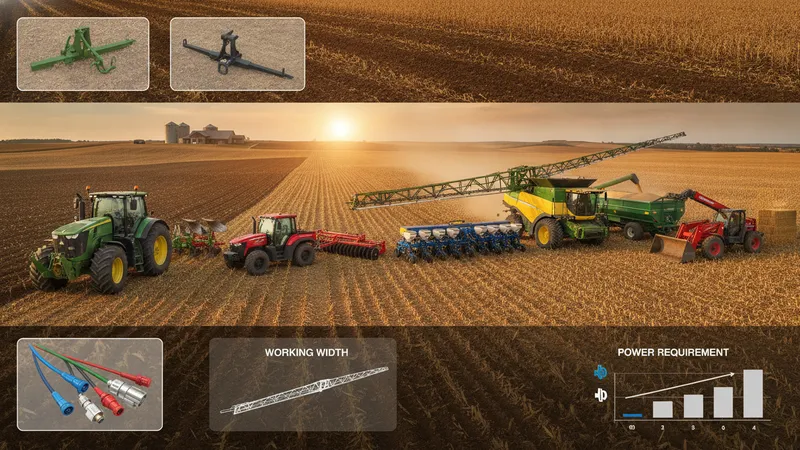
When comparing implement families, considerations often include working width, required power, hitch type and hydraulic or electrical interfaces. Wider implements increase effective field coverage but may need higher drawbar or PTO power. Hitch types—three-point, drawbar, or specialized mounts—affect compatibility and ease of attachment, while hydraulic flow and control requirements determine whether a tractor can operate a given implement efficiently. These technical characteristics generally dictate whether an implement is suited to a given power unit and operational plan.
Harvesting equipment differs substantially by crop harvested and the separation process required. Small-grain combines are designed to cut and thresh cereals with headers sized to field and transport constraints. For root and tuber crops, harvesters perform digging, cleaning and conveyance. Forage harvesters chop biomass for storage and feed use. Each class of harvester involves trade-offs among throughput, cleaning performance, residue management and fuel consumption. Operators commonly consider the match between header type and crop to reduce losses and improve yield retention during harvest.
Material-handling implements and yard equipment are often overlooked but can be critical to post-harvest efficiency. Front loaders, telehandlers and forklifts provide flexibility in moving bales, pallets, and bulk product, while conveyors and augers manage grain movement. Selection hinges on lift capacity, reach, and manoeuvrability in farmyard conditions. Adequate planning for material flow, including temporary storage and vehicle access, may reduce handling time and stress on primary machinery during peak harvest operations.