
Biomass Gasification Systems: How Thermochemical Conversion Produces Syngas For Energy

Energy Applications, System Integration, and Environmental Considerations
Syngas from biomass gasification can be used across a range of energy applications, including direct combustion for heat, combined heat and power (CHP) systems, engine or turbine-driven electricity generation, and chemical synthesis through catalytic pathways. The choice of application affects required syngas quality and system configuration: power generation often tolerates lower syngas purity than processes that feed catalytic reactors. Integration strategies, such as heat recovery to support feedstock drying or steam generation for hydrogen-enhancing reactions, may improve overall energy efficiency and reduce external energy inputs.
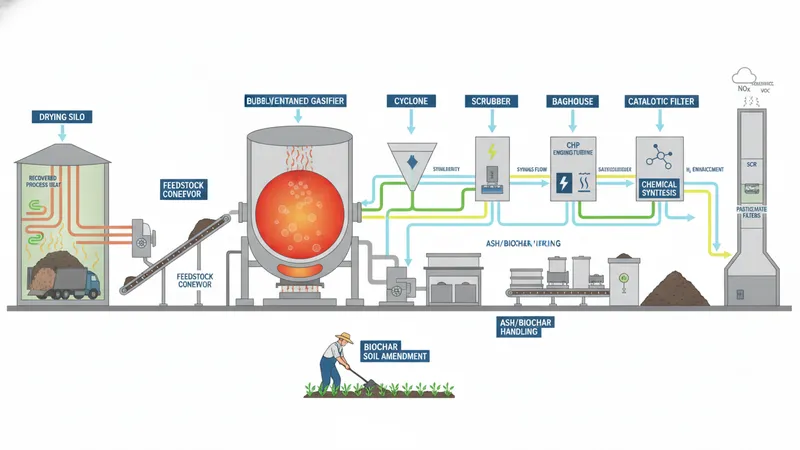
System integration also considers lifecycle environmental performance. When feedstock is sourced from residues or sustainably managed biomass, greenhouse gas balances may be favorable compared with fossil fuels, though outcomes depend on logistics, preprocessing energy, and land-use change effects. Emissions control for NOx, particulates, and volatile organics remains important to meet local air quality requirements. Management of solid residues like ash or biochar is another environmental factor; residues may be used as soil amendments or require disposal depending on contaminant levels.
Operational optimization often explores trade-offs between electrical efficiency and useful heat recovery. Smaller gasification units may prioritize heat for local industrial processes, while larger systems may favor electricity production with appropriate power conditioning and grid interconnection. Economic and environmental assessments typically incorporate the value of heat utilization and the costs of gas cleaning and maintenance. Sensitivity analysis on feedstock availability and seasonal supply variability is commonly used to assess long-term viability without implying financial outcomes.
Insider considerations include planning for variable syngas demand and modular upgrades. For instance, a facility that initially supplies heat might plan space and connections for later addition of gas polishing or catalytic units if the operator later pursues electricity generation or synthesis routes. Regular environmental monitoring and adaptive management of feedstock sourcing can help maintain compliance with emission standards and support transparent reporting on greenhouse gas performance. These measured approaches can inform phased deployment and reduce operational uncertainty over time.