
Brokerage Accounts And Trading Platforms: Key Features And How They Work

Fees, pricing structures, and cost considerations for brokerage accounts and trading platforms
Fee models across the described platform types can vary widely and typically include components such as commissions per trade, spreads, account maintenance fees, and subscription fees for premium tools. In recent years many discount brokerages have moved to commission-free pricing for standard equities trades, while options trading or broker-assisted trades may still incur explicit per-contract or per-trade charges. Full-service platforms commonly charge advisory fees or commission schedules that reflect additional services like personalised advice and research access.
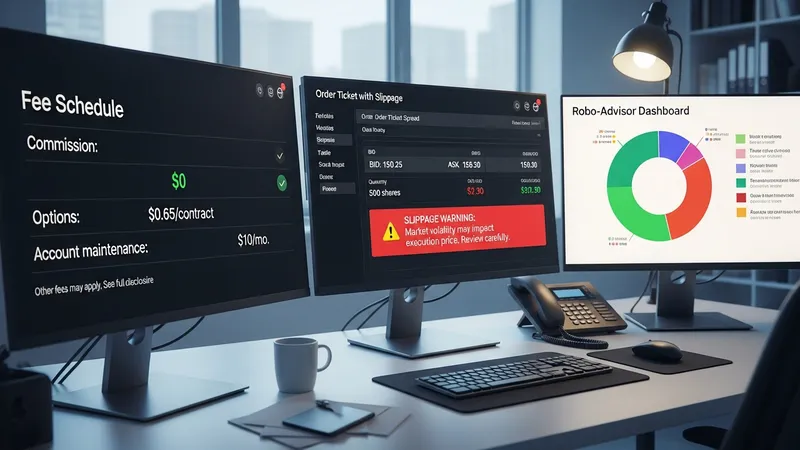
Indirect costs should also be considered: bid-ask spreads, possible execution slippage, and margin interest on borrowings can affect overall transaction cost. Margin interest rates may be tiered based on borrowed amounts and can vary across providers. For robo-advisors, fees are often expressed as a percentage of assets under management and may include underlying fund expenses such as expense ratios for ETFs or mutual funds. Comparing fee components in regulatory fee schedules or pricing disclosures can help contextualise typical cost patterns.
Some platforms offer premium data, advanced analytics, or direct-access features under subscription plans; these costs can be recurring and may be justified for some users depending on trading style and information needs. Other potential fees include transfer fees, inactivity fees, or fees for broker-assisted transactions. Fee disclosures and clear examples in account documents are commonly provided to help clients estimate recurring and transactional charges without implying specific savings or outcomes.
When assessing cost, investors often weigh transparency and predictability of fees alongside service scope. Fee structures that itemise charges and provide examples for typical trade sizes may make comparative evaluation easier. Cost considerations may influence the choice among a full-service provider with bundled services, a low-cost broker with a la carte add-ons, or a robo-advisor with an asset-based fee, depending on the expected level of activity and the services most relevant to the account holder’s objectives.