
Cancer Immunotherapy: Key Advances In Targeted Treatment Approaches

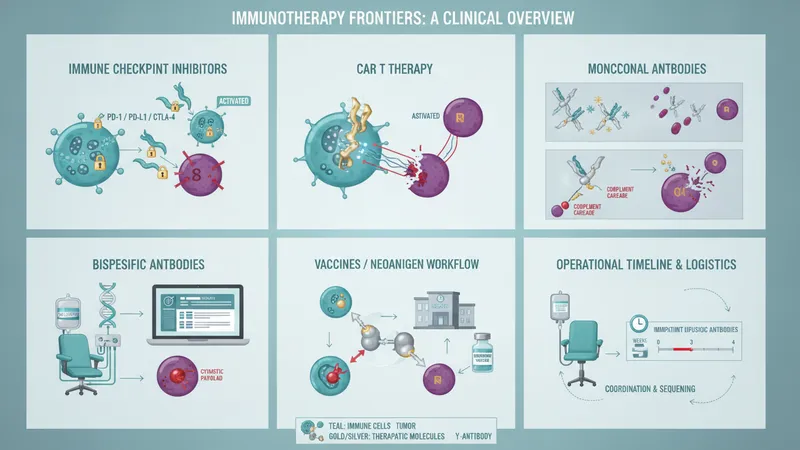
Mechanisms and categories of cancer immunotherapy approaches
Immune checkpoint inhibitors act by disrupting inhibitory signals that limit T-cell activity; commonly studied targets include PD-1, PD-L1, and CTLA-4. CAR T-cell therapies create synthetic receptors that combine an antigen-binding domain with intracellular signaling motifs, enabling redirected cytotoxicity against cells expressing the target antigen. Monoclonal antibodies may function through direct blockade, immune-mediated cytotoxicity, or delivery of cytotoxic payloads when conjugated. Bispecific antibodies connect cytotoxic lymphocytes to tumor cells via dual binding domains. Vaccines and neoantigen strategies present tumor-related peptides to antigen-presenting cells, aiming to prime adaptive responses. Each category therefore exploits distinct steps of immune recognition and effector function.
These categories often differ in lead time to treatment and in coordination needs. Systemically administered antibodies may be available for immediate outpatient infusion, while autologous CAR T-cell processes typically include leukapheresis, manufacturing windows measured in weeks, and coordination with bridging therapies. Vaccine or neoantigen workflows involve sequencing, epitope selection, and formulation timelines that can vary substantially. Bispecific formats can be engineered for different half-lives and dosing schedules. Understanding these operational differences may help clinicians and institutions plan sequencing and supportive care.
Clinical contexts where one category may be favored often relate to tumor antigen expression and prior therapies. Cancers expressing lineage-restricted antigens or high levels of a target may be candidates for antigen-directed cellular therapies or antibody-drug conjugates, whereas tumors with higher mutational burdens can sometimes be more responsive to checkpoint modulation, potentially due to increased neoantigen load. However, these are probabilistic associations: responses can occur outside expected patterns, and predictive biomarkers remain an active area of study to refine selection.
From a research perspective, modular engineering and platform technologies are enabling variant constructs across categories. For example, CAR designs include costimulatory domains that can modify persistence and function; bispecific platforms vary in valency and geometry; vaccine technologies use peptide, RNA, or viral platforms with different manufacturing and immunogenicity considerations. These technical distinctions are driving iterative clinical testing to determine which design parameters correlate with durable antitumor activity and manageable safety profiles.