
Home Automation: How Connected Devices Transform Everyday Living

Voice, App Controls, Hubs, and Connectivity Layers
Voice assistants and mobile apps provide user-facing interfaces for control and monitoring but differ in architecture and privacy implications. Voice interfaces often rely on cloud processing for natural language parsing, which may introduce additional data flows outside the home. Mobile apps can communicate either through a vendor cloud or directly with a local hub. Hubs and bridges translate among communication protocols—such as Zigbee, Z-Wave, Thread, and Wi‑Fi—allowing diverse devices to interoperate. Choosing whether automation logic runs on the hub or in the cloud affects latency, offline operation, and the surface area for updates.
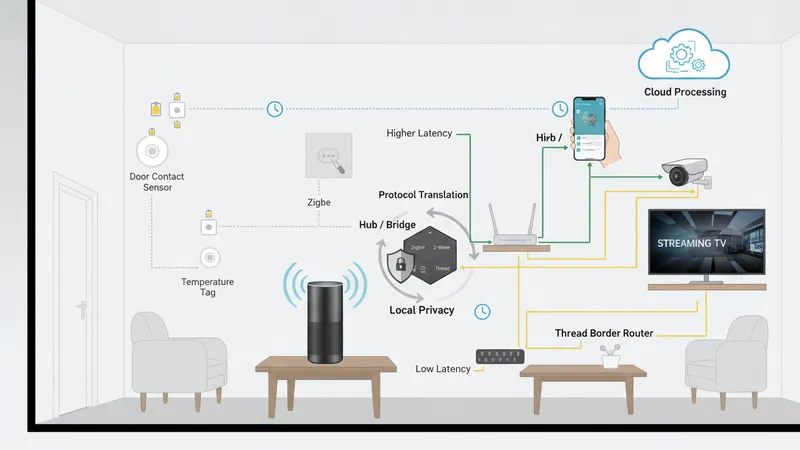
Protocol choice and network design influence device reliability and response times. Mesh protocols like Zigbee and Z-Wave extend range through intermediary devices and often consume less power, making them suitable for battery-powered sensors. Wi‑Fi provides higher bandwidth but may be less power-efficient for many small sensors. Thread is an IP-based low-power option that can integrate with other IPv6 services. Network planning typically includes ensuring sufficient wireless coverage, avoiding interference, and considering redundant connectivity paths for critical devices.
Integration patterns matter when combining voice, app, and hub controls. Systems that expose local APIs may permit third-party controllers or home automation platforms to operate without cloud dependency, enabling rules to run even when internet access is unavailable. Conversely, cloud-reliant devices can offer remote access and vendor-hosted automation but may cease certain functions during outages. Many households adopt a hybrid mix: local execution for safety-critical automation and cloud services for convenience features such as remote notifications or advanced analytics.
Operationally, maintaining connectivity involves software updates, periodic reboots of network equipment, and monitoring for degraded links. Insider considerations include segmenting IoT traffic away from primary computing devices, setting clear device naming conventions for ease of troubleshooting, and using manufacturer documentation to confirm supported protocol versions. Thoughtful namespace and access configurations reduce confusion as systems scale and can prevent unintended interactions between automations and voice or app commands.