
Roof Repair: Identifying Common Roofing Problems And Early Warning Signs

Factors affecting roof condition and considerations for assessing repairs
Material type, age, and installation quality often influence both the manifestation of early warning signs and the options for repair. Different materials commonly exhibit different initial symptoms—shingles may crack or lose granules, metal may show corrosion or seam separation, and membranes may blister or puncture. Age-related degradation can make materials more susceptible to weathering and mechanical damage, so assessing the likely remaining service life of components alongside present symptoms helps determine whether localized repair or more extensive rehabilitation may be appropriate, described here as consideration rather than recommendation.
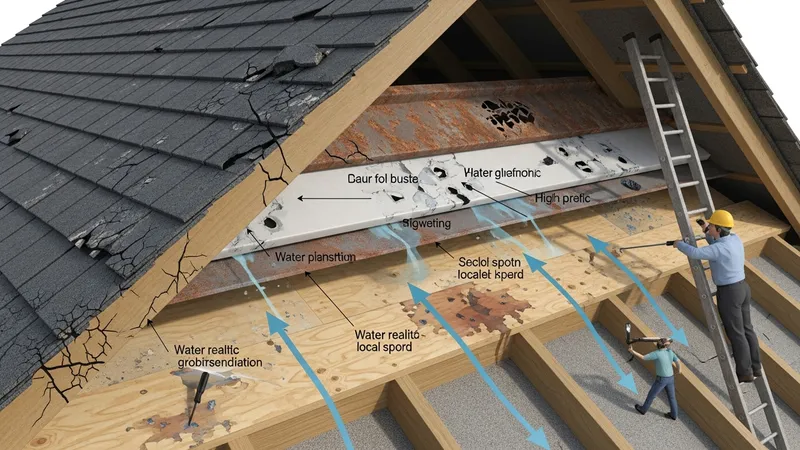
Structural factors under the roofing materials can affect observed warning signs and repair needs. Decking condition, roof slope, and underlying framing integrity influence how water moves through the assembly and where damage concentrates. For example, sagging or soft spots in decking often accompany prolonged moisture exposure and may indicate the need for substrate replacement rather than superficial patching. Inspectors typically evaluate these structural indicators through attic access, selective probing, or localized removal to determine the extent of deterioration beneath visible signs.
Climate and seasonal exposure patterns can accelerate specific failure modes and should be considered when interpreting warning signs. Freeze-thaw cycles may exacerbate cracking in brittle materials, intense sunlight can accelerate coating and sealant breakdown, and frequent storms may cause repeated wind uplift or impact damage. Accounting for these environmental influences helps clarify whether observed defects are likely isolated events or part of an ongoing stress pattern, which in turn informs the choice of diagnostic follow-up and potential repair scope.
Cost and resource considerations are often part of planning corrective actions but should be informed by accurate condition assessment rather than assumptions. Diagnostic tools and staged inspection methods can reduce uncertainty about the extent of hidden damage, potentially avoiding unnecessary wide-area interventions. Conversely, when diagnostics indicate widespread substrate wetting or structural compromise, more comprehensive actions may be required. Presenting data from inspections—photos, moisture readings, and thermographic images—can help stakeholders understand the condition objectively without implying specific procurement steps or recommending vendors.