
Solar Electricity: Essential Concepts And How Solar Power Is Generated

Solar electricity: System performance factors and operational considerations
System yield depends on irradiance levels, module orientation and tilt, soiling, shading, and temperature. Solar resource varies by location and time of year; resource assessment often uses historical irradiance datasets and may account for local weather patterns. Tilt and azimuth that optimize annual yield can differ from those that optimize instantaneous output or seasonal generation. Soiling and maintenance schedules can notably affect output in some climates, while shading from nearby objects can reduce string performance unless module‑level power electronics are used.
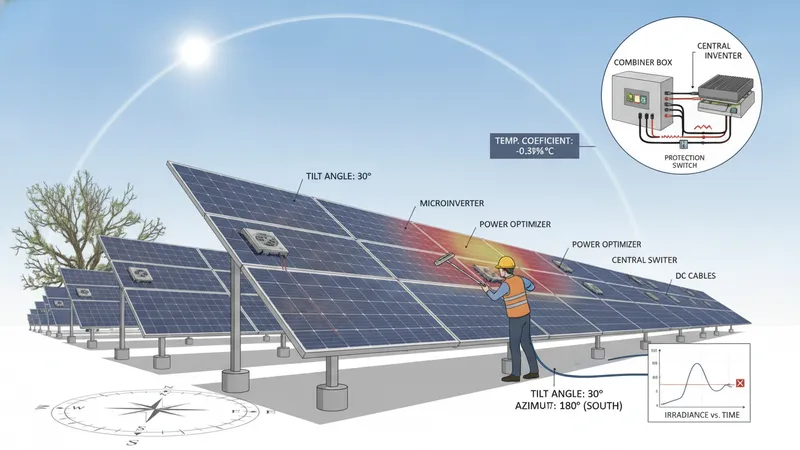
Electrical losses also influence delivered energy. These losses occur in module wiring, connectors, combiner boxes, and inverter conversion processes. Cable sizing and layout affect resistive losses, while protection devices and switches introduce small additional drops. Temperature coefficients capture how module voltage and current vary with temperature, and these coefficients are applied in production modeling to estimate realistic output under expected thermal conditions. Designers typically include conservative margins to account for these predictable losses.
Operation and maintenance practices can extend useful system performance. Periodic inspection of module integrity, connector condition, and mounting hardware helps identify degradation or damage. Firmware updates for power electronics can address bugs or add functions, while monitoring data may reveal trends that suggest corrective actions such as cleaning or replacement. Safety protocols for working on energized systems and procedures for isolating equipment are part of routine operational planning to reduce risk to personnel and equipment.
Long‑term performance projections often use degradation rates provided by manufacturers and historical field studies to estimate annual production decline. These projections are used for planning and comparison across design options, but actual outcomes can vary with installation quality, environmental exposure, and operational choices. Understanding the range of factors that affect generation helps stakeholders set realistic expectations and plan maintenance, monitoring, and potential component replacement over the system’s operational life.