
The Real World AI: Understanding Practical Applications And Use Cases

Natural Language Processing Applications and Practical Considerations
NLP applications in operational contexts commonly address tasks such as document classification, information extraction, summarization, and conversational interfaces. Preprocessing steps like tokenization, normalization, and stop-word handling prepare raw text for modeling. Embedding techniques convert text into numerical representations; recent transformer-based models provide contextualized embeddings that often improve downstream task performance but require greater computational resources. Selection of model complexity should consider dataset size, latency requirements, and the need for interpretability in user-facing or regulated contexts.
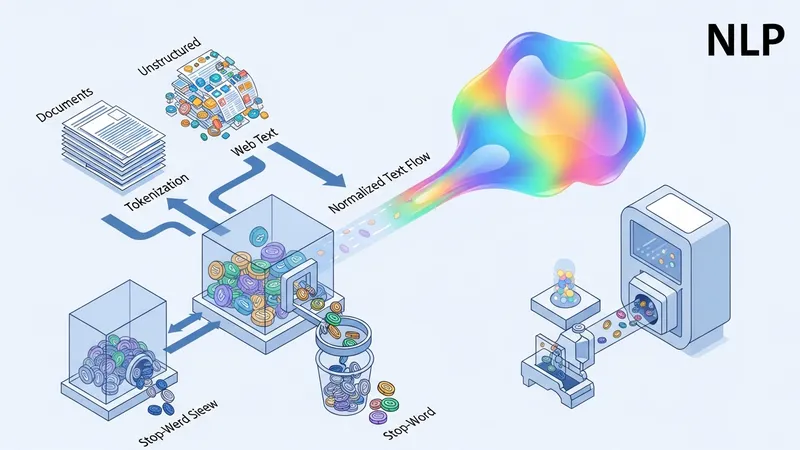
Pipeline design for text-based systems may include annotation strategies, quality control for labeled data, and iterative model updates. Labeling guidelines intended for human annotators can improve consistency in training sets. Evaluation typically uses metrics such as F1 score for classification, ROUGE for summarization, or task-specific measures for extraction accuracy. Human-in-the-loop approaches are often used to validate outputs, correct model errors, and provide ongoing feedback that supports incremental improvement.
Deployment choices can affect user experience and cost. On-device or edge inference may be appropriate where latency and offline operation are critical, while cloud-hosted models can provide rapid scalability and access to larger models. Hybrid approaches sometimes combine lightweight local models for immediate responses with backend systems for deeper analysis. Practical NLP implementations also consider multilingual support, handling of sensitive content, and mechanisms to flag low-confidence outputs for human review.
Ethical and privacy considerations often influence NLP use. Text may contain personally identifiable information or sensitive subject matter, so data minimization, anonymization, and access controls are commonly applied. Bias in training data can affect model outputs; therefore, auditing for disparate performance across groups and documenting limitations may be used to inform stakeholders. These governance practices typically form part of responsible deployment strategies.