
Water Heater Replacement: Key Steps In Planning And Installation

Selecting Units and Energy Efficiency Considerations for Water Heater Replacement
Selecting an appropriate unit frequently balances capacity, energy efficiency, and compatibility with the existing site. Energy performance for water heaters is commonly expressed using standardized metrics such as the Uniform Energy Factor (UEF) or similar ratings. Electric resistance tanks often show lower energy efficiency compared with heat pump systems when conditions are favorable for heat-pump operation. Tankless units may show higher theoretical efficiency for continuous-flow demands, although real-world gains depend on usage patterns and inlet water temperatures.
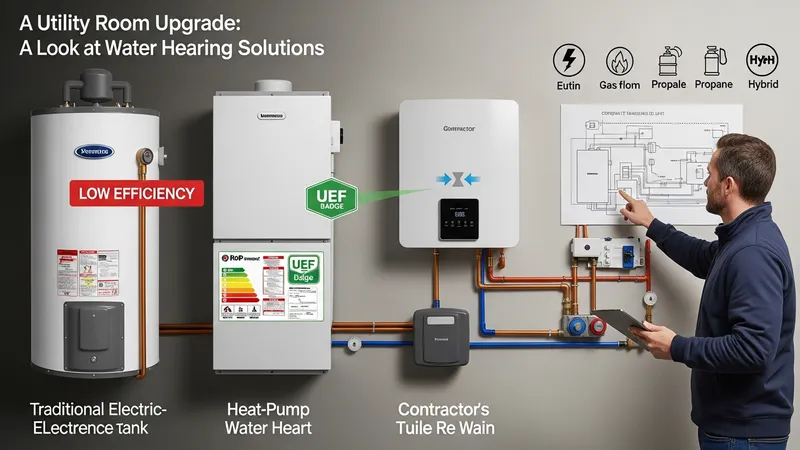
Fuel type considerations—electric, natural gas, propane, or hybrid—affect installation and operating characteristics. Fuel availability and cost in a particular area may influence choices, as can the need for upgraded service equipment like a larger gas meter or higher-capacity electrical panel. When converting fuel types, additional mechanical and code requirements typically apply, and such conversions often increase project complexity. Comparing typical operating patterns rather than relying on a single metric may present a more reliable prediction of likely energy use.
Capacity and sizing calculations differ by technology. For storage tanks, sizing often focuses on first-hour delivery or total gallon capacity relative to peak morning demand. For tankless units, sizing usually focuses on the required flow rate at a given temperature rise, which can vary by shower fixtures and simultaneous loads. Heat pump systems may be sized to meet average daily use with supplemental resistance elements for peak demand. Conservative planning may allow for future changes in household demand while avoiding frequent short cycling or undersizing.
Lifecycle considerations may include projected energy use, maintenance requirements, and expected usable life. Tanks may have relatively straightforward maintenance tasks but typically have limited lifespans due to corrosion and anode depletion. Tankless and heat pump systems may have different maintenance needs—such as descaling or refrigerant service—depending on hardness of local water and unit design. Considering these factors alongside local climate and typical usage can inform a balanced selection approach.